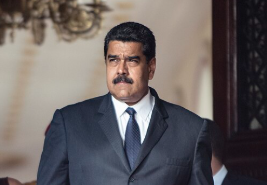
Despite the capture of President Nicolás Maduro by United States forces, Venezuela’s political regime appears to be continuing with the vice-president and other members of the former president’s entourage still in positions of authority. Security analysts are questioning whether the Saturday operation will achieve its apparent goal of regime change or simply reshuffle leadership within the existing system.
Dr. Carlos Solar from the RUSI think tank noted that when Hugo Chávez died, Maduro succeeded him and Chavismo continued for another decade and a half. He suggested that Maduro’s removal might not end the political movement, with new figures potentially emerging to lead what remains of the Venezuelan government structure.
The captured Venezuelan leader and his wife Cilia Flores are being transported to New York to face drug trafficking charges, according to US Attorney General Pam Bondi. Secretary of State Marco Rubio confirmed the charges relate to narcotics operations, while President Trump stated the couple is aboard a ship bound for the United States for prosecution.
The international community has responded with widespread condemnation of the military operation, with UN Secretary General António Guterres warning of dangerous precedents. Major powers including China, Russia, France, and Brazil have criticized the action as violating fundamental principles of sovereignty and international law.
Latin American responses have split along ideological lines, with conservative governments offering support while leftist administrations condemned the intervention. Colombia has mobilized its armed forces due to concerns about refugee flows across its border, and experts emphasize that even if regime change occurs, there is no guarantee that what replaces the current government will be democratic without sustained international engagement.