
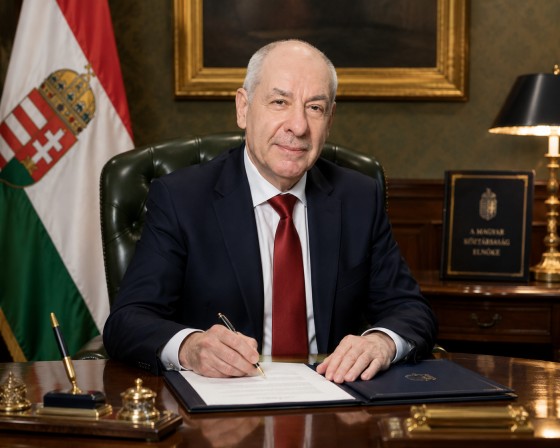
János Áder, the former President of Hungary, has voiced strong opposition to the attempt to oust President Tamás Sulyok, labeling the move as a “constitutional coup” that threatens Hungary’s constitutional framework. In a recent podcast appearance, Áder emphasized that political disputes should not be grounds for legal actions against the president. He elaborated that the Hungarian constitution explicitly outlines that a president’s removal requires an impeachment process, which involves a two-thirds majority in parliament and must be based on evidence of constitutional or legal infractions.
The controversy revolves around the proposed 17th amendment to Hungary’s Fundamental Law, which, if enacted, would compel President Sulyok to vacate his position immediately. Áder criticized this proposal, arguing that it circumvents the constitutional impeachment process and equates to retroactive legislation that violates the constitution. He further dismissed allegations that Sulyok failed to appropriately handle certain political controversies, categorizing such accusations as political criticisms rather than legal breaches warranting removal from office.
Áder expressed concerns that bypassing the established legal procedures to remove the president through a constitutional amendment would significantly damage the presidency’s legitimacy and undermine the rule of law in Hungary. He warned that any president appointed under these conditions would encounter challenges regarding their constitutional legitimacy and their capacity to embody national unity.
The former president’s remarks highlight the potential consequences of altering the constitutional process for removing a sitting president, emphasizing the importance of adhering to legal norms to maintain political stability and uphold democratic principles. Áder’s critique underscores the contentious nature of the proposed amendment and its implications for Hungary’s political landscape.