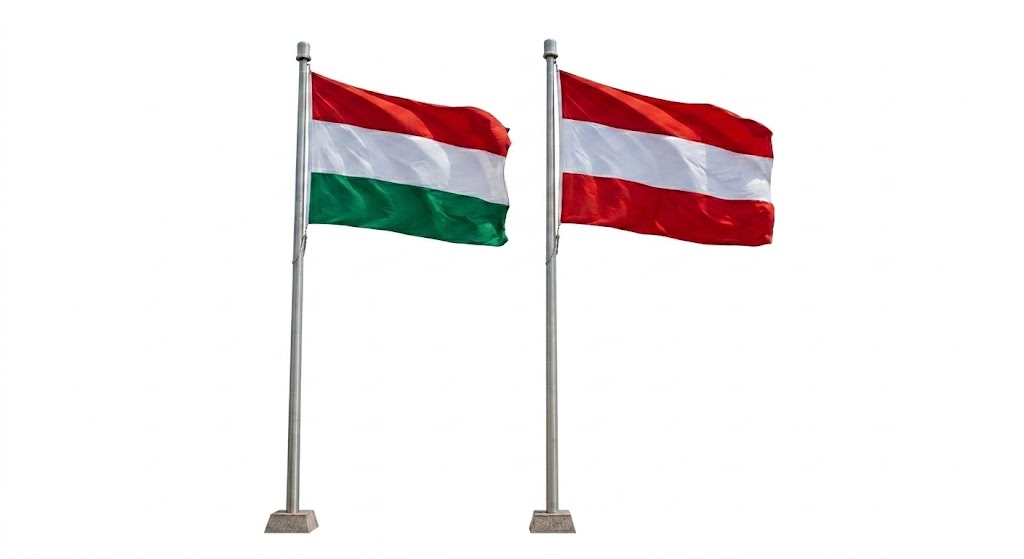
Austrian Chancellor Christian Stocker welcomed Hungarian Prime Minister Péter Magyar to Vienna on Thursday in a move to strengthen cooperation and refresh bilateral ties. This visit, marking Magyar’s second official foreign trip since assuming office, included a series of discussions with Austrian leaders, business figures, and regional officials. The Hungarian delegation accompanying Magyar comprised senior ministers overseeing foreign affairs, the economy, transport, and environmental policy.
During a joint press conference, Magyar emphasized Hungary’s commitment to being a constructive partner within the European Union while safeguarding its national interests. He underscored the significance of cooperation within European institutions and regional alliances. Stocker highlighted the symbolic importance of Magyar’s election victory and expressed that enhanced collaboration between Austria and Hungary could bolster Central Europe’s influence within the EU framework.
The leaders agreed to convene a joint cabinet meeting in September in Gödöllő, Hungary, with the aim of deepening political and economic coordination. Additionally, Magyar announced plans for a regional summit involving the Visegrád Group countries, potentially including neighboring nations such as Austria, Croatia, Romania, and Slovenia. Key agenda items during the talks included migration, energy policy, and regional security. Both governments advocated for stronger collaboration on border management and supported the acceleration of European Union expansion into the Western Balkans.
In the energy sector, Austria and Hungary called for the development of expanded cross-border infrastructure and more diversified supply networks. Discussions also covered major transport projects, such as enhancements to rail links between Budapest and Vienna and the extension of road connections toward Austria. Economic relations were another focus, particularly concerns over Hungary’s special taxes impacting Austrian companies. Magyar acknowledged Hungary’s challenging budget situation and expressed the government’s intent to foster a more transparent and growth-oriented economic system while attracting higher-value foreign investments.
Environmental issues, specifically the matter of asbestos-contaminated stone shipments from Austrian quarries into western Hungary, were prominently addressed. Magyar announced the establishment of a joint Austrian-Hungarian commission to investigate and oversee the cleanup of the issue. Stocker pledged Austrian support and cooperation in addressing Hungary’s concerns, further solidifying the commitment to collaborative efforts between the two nations.