
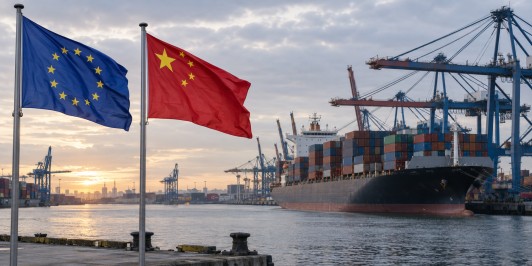
The mounting trade deficit between the European Union and China is stirring economic tensions, with the EU’s deficit reaching a substantial €36.5 billion in July 2026. This growing imbalance is prompting European officials to consider strategic measures to counteract the heavy reliance on Chinese imports, particularly in sectors like hybrid vehicles and chemicals.
According to Eurostat, the EU imported goods worth €53.9 billion from China in July, marking an 8% increase from the previous year. In contrast, exports to China fell by 1.6%, totaling €17.4 billion. The widening gap is not just a monthly anomaly; from January to July 2026, the trade deficit expanded to approximately €234 billion. This trend underscores the EU’s increasing economic dependence on Chinese goods, which is becoming a pressing issue for European policymakers.
One of the key areas of concern is the automotive sector, where imports of hybrid vehicles from China have surged. This follows the EU’s imposition of additional tariffs on Chinese electric vehicles back in 2024. However, hybrid vehicles were subject to different tariff treatments, leading to a spike in imports that European officials are now seeking to address, potentially through voluntary export limits from China.
The ongoing trade imbalance is expected to be a focal point in upcoming EU-China discussions. European leaders are eager to strengthen their export capabilities while reducing reliance on imports from China, especially in strategic sectors that are crucial for the EU’s economic stability and growth.
The developments signify a complex challenge for the EU as it navigates its economic relationship with China. The bloc’s efforts to recalibrate its trade strategy reflect broader concerns about maintaining equitable trade relations and safeguarding its economic interests in a rapidly globalizing world.