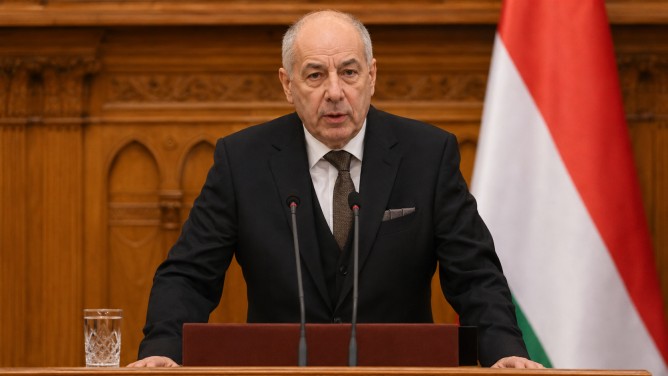
In Hungary, a constitutional conflict has intensified following the parliamentary approval of an amendment potentially cutting short President Tamás Sulyok’s current term. The proposed change, driven by the majority in parliament, mandates the president to endorse the legislation for it to become effective. This situation has led to a legal impasse, as President Sulyok’s signature would effectively bring about the premature end of his presidency.
During a recent event to commemorate the “Day of the Courts,” President Sulyok took a stand for judicial independence and the rule of law, highlighting the importance of legal principles over political agendas. His comments were perceived as a direct response to this unfolding constitutional dilemma. The president’s office has issued statements urging adherence to constitutional principles and cautioning against unchecked parliamentary authority.
Experts in the legal field suggest that President Sulyok’s alternatives are constrained under the current Hungarian constitution. One potential course of action would be to challenge the amendment by bringing it before the Constitutional Court on procedural grounds. However, should the court determine there are no legal issues, the president would be obliged to sign the amendment.
Should the president opt not to sign the amendment, parliamentarians could consider initiating impeachment proceedings or declare him temporarily unfit to execute his duties. This would transfer presidential responsibilities to the speaker of parliament, who could then sign the legislation. The proposed amendment has sparked broader discussions about the rule of law in Hungary, with legal experts emphasizing the necessity for constitutional amendments to uphold legal certainty and maintain the autonomy of public institutions.